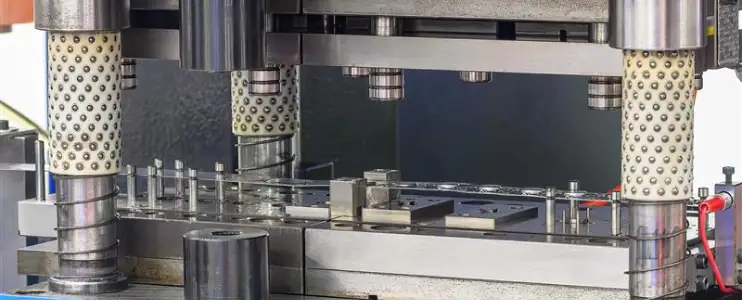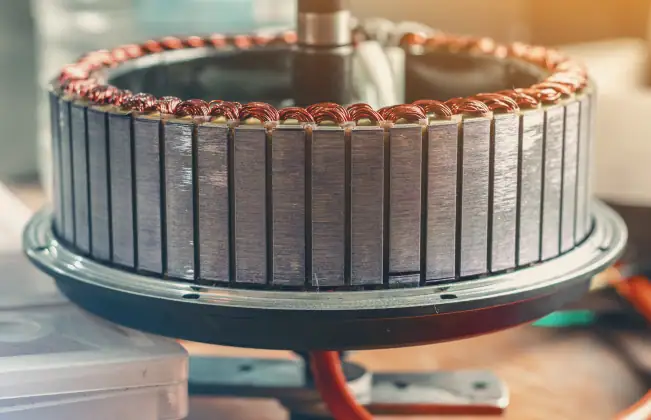
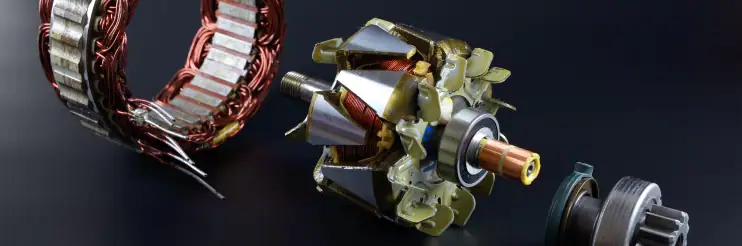
Lamination stack prototyping lets us confirm a design will perform before we invest in full production tooling. The process starts with alloy selection: cobalt, nickel, or silicon steel, depending on your motor’s performance needs. Once we settle on the alloy, we stamp, notch, or laser-cut the laminations, then build fixtures to stack them to the height your design calls for.
This step matters even more given a trend we’re seeing across the industry: engineers are asking for thinner and thinner materials. We already work with cobalt and nickel-iron alloys as thin as .004 in., and while we get regular requests for .003 in. and .002 in., we hold the line at .003 in. for now. Thinner stock is harder to handle without damage, and prototyping is where we catch those handling issues before they become production problems.